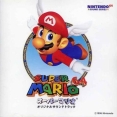
100% identical to the in-game sound except that it uses the original uncompressed source samples instead of the in-game samples. Other than the crispity clearity HD quality, the sound is completely identical.
I wasn't saying you were gatekeeping, I was saying the guy that didn't give you permission was gatekeeping, forcing the community to reinvent the wheel once again without regards or consideration to the time of others and naming himself the king that decides who gets to have what, and who doesn't. What a waste.
But, anyway, we got it, bros! minTJ got the samples and made the soundfont!
If that’s all you want to make then yes, that’s fine. I thought you meant they would make this type of project a breeze, as if it’s just about getting the samples and almost nothing else. All the details are important for this type of project, but for your own things just have fun!!
But you’re suggesting I am not releasing them to gatekeep the quality of projects out there?
I don’t release them because I don’t have permission.
But also I didn’t think I needed to: https://docs.google.com/spreadsheets/d/1JJBlHHDc65fhZmKUGLrDTLCm6rfUU83-kbuD8Y0zU0o/edit?pli=1&gid=717751203#gid=717751203
A small community should be able to scrounge all of those up. It may even be fun!
The Super Mario 64 soundfont is "good enough" for Youtubers to use it to create covers and new tunes with it, it's just not in crisp HD. Let's hope someone that cares about what the community gets releases one day the original samples to create the HD soundfont, because nobody else can do it because of the lack of samples, not because it's too difficult to get them right (you won't believe the work I had to do for the Jal Tarang soundfont at musical-artifacts, including different envelopes for different pitches of the notes, to get the sound perfect, that's why I can say a Super Mario 64 HD soundfont would be a breeze in comparison -it's not going to take more than a day for each instrument-, if we had the samples.) Imagine keeping them private for fear of someone releasing a bad quality product.
I think this misconception is why we have so many remakes that feel “off” somehow.
I think a lot of people get their hands on the HD source samples used in video-game music and think that’s their free passes to “the same thing but in HD”. Even if you have the source samples, it is still critical to get the pan laws, volume responses, and reverbs correct, on top of ensuring that the samples have the same loop points as in the game, micro-adjusting their volumes one-by-one to match the in-game volumes, and applying identical envelopes to them. Some games use exponential slopes between envelope points, some use linear segments, some user polynomial curves.
In some games the envelope point volumes are calculated as simply X/127, whereas in others it is (X/127)×(X/127).
You can listen to any of my other HD restores and hear how HD they sound without using HD samples (they all use the in-game samples), so in reality it turns out that just having the source samples is actually such a tiny part of the equation.
Give these a shot:
https://downloads.khinsider.com/game-soundtracks/album/banjo-kazooie-hd-n64-gamerip-1998
https://downloads.khinsider.com/game-soundtracks/album/conker-s-bad-fur-day-gamerip (note: This is someone else uploading my versions.)
https://downloads.khinsider.com/game-soundtracks/album/mario-kart-64-stereo-surround-hd-n64-gamerip-1996
All of these use in-game samples but still sound crisp clear and HD.
Most of the magic doesn’t actually care how good the samples are (to a point obviously).
I debugged the games and rewrote their audio synthesis routines into the tool I mentioned above, Nintendo Synthy-4, except where the games took shortcuts to save on CPU, I implemented full algorithms, and where the games used a 16-bit PCM pipeline, I used a fully 64-bit floating-point pipeline to keep everything crisp and clean and HD throughout.
The same samples, sound banks, and MIDI files are loaded and processed through the same pipeline except converted to HD. Except that in this case the samples were swapped out for higher-quality source samples.
The end result is the exact same in-game sound (same pan laws, volume levels, envelopes, modulo, reverb, etc.) but crisp clean HD.
Church of Kondo (I assume) has restorations made in FL Studio or a different audio software used to recreate the music from the ground up. This one converts audio data from its official USF files or whatever format it's in to a WAV w/o the filtering the audio engine in Sm64 has (Or removes the filtering that standard USF players have).
But I can't verify this, since this is what I think it does. I'm not dedicated enough to look at the source code of the software used to convert this all, or look at any documentation of this.
OK, I tried to use the software for myself. Apparently, you need the MIDI and samples that were used in the game's music files to convert it.
I’m afraid I don’t use SoundFont files or other common soundbank file formats, so I don’t have anything prepared I could hand out!
Here is the synthesizer I made to create these: https://github.com/L-Spiro/Nintendo-Synthy-4
It’s not user-friendly at the moment, but someday it will be.
To create a SoundFont file you wouldn’t need to record every note one-by-one; you can use the same set of samples I used (though they were given to me personally so I can’t direct you to a public place to download them), and modulo is only used in 2 tracks I believe. You should be able to match the modulo parameters exactly in a SoundFont, so you wouldn’t have to record note-by-note. Actually EAD games use modulo rather than vibrato, which basically just means they can change the amount of vibrato at run-time, so note-by-note recordings wouldn’t really be able to capture that. I can’t give out my sample files, but I do believe you can find them somewhere.
As for the rest, I have to agree about pursuing your passions! Especially when it comes to learning to program. Being able to program means having the power to dream any dream and then make it a reality on your own!
Thank you for your response, I appreciate it. I'll see what I can do with this information.
I’m afraid I don’t use SoundFont files or other common soundbank file formats, so I don’t have anything prepared I could hand out!
Here is the synthesizer I made to create these: https://github.com/L-Spiro/Nintendo-Synthy-4
It’s not user-friendly at the moment, but someday it will be.
To create a SoundFont file you wouldn’t need to record every note one-by-one; you can use the same set of samples I used (though they were given to me personally so I can’t direct you to a public place to download them), and modulo is only used in 2 tracks I believe. You should be able to match the modulo parameters exactly in a SoundFont, so you wouldn’t have to record note-by-note. Actually EAD games use modulo rather than vibrato, which basically just means they can change the amount of vibrato at run-time, so note-by-note recordings wouldn’t really be able to capture that. I can’t give out my sample files, but I do believe you can find them somewhere.
As for the rest, I have to agree about pursuing your passions! Especially when it comes to learning to program. Being able to program means having the power to dream any dream and then make it a reality on your own!
I wish to see a soundfont be made out of these high-quality samples, all with the same tremolo, envelopes, delay, reverb, and chorus. Although, I do believe this would require rendering every instrument individually with the proprietary C++ synthesizer made specifically for this project, each recording being a one-shot playing a singular note, and the musical note in question is different every time. It would be a time-consuming process. Would be cool for the general public? Yes, absolutely! But would it be worth it for the individual responsible for the creation of the desired soundfont? I do not have the answer to that question, unfortunately.
Another option available to us would be to look up for the sources of Super Mario 64's instruments for the explicit purpose of making our own soundfonts. Although, the software and techniques we'd be using may not be on-par with the restoration project we're commenting on, but hey! Don't let your skills discourage you from committing to your endeavors. Taking the initiative is better than standing cowardly at the start of the pathway leading to your destiny. You gain experience as you go, and you can then use that experience to improve your skills and expand your knowledge. If what you're doing doesn't turn out the way you hoped, then no harsh feelings. You made the attempt and that is fantastic! You passed through the obstacles everyone else shied away from, and I believe your efforts are admirable. Keep on growing, keep on learning, keep on improving, and keep having fun!
This is actually awesome! My biggest worry with "restored music" projects is that they may just sound off and different from the originals, and it's what drives me away from a lot of them.
That is exactly the issue! When I want to listen to an OST in HD, I still want it to sound exactly like how it does in the game, just crisp and clean!
“Restores” in the style of Church of Kondo can sure sound nice, and it’s always good to provide people with options for how they want the restored music to sound, but having restored music that sounds identical to the in-game sound has been a gap that has needed to be filled for a very long time!
Nope!
These are from Video-Game OST HQ, where I take a different approach to rendering Nintendo 64 music in HD! I debugged the games and copied the audio-rendering code into a new C++ synthesizer designed specifically for rendering music how Nintendo 64 does, except where the games use approximations and take shortcuts for performance, I use the fully detailed algorithms using 64-bit floats instead of 16-bit PCM!
The result is literally the exact in-game music—the same reverb, the same vibrato, the same tremolo, the same envelopes, etc.—except all in HD!
In this case there was an additional upgrade in that the original HD uncompressed source samples were used instead of the in-game samples!
Enjoy!
This is actually awesome! My biggest worry with "restored music" projects is that they may just sound off and different from the originals, and it's what drives me away from a lot of them.
Nope!
These are from Video-Game OST HQ, where I take a different approach to rendering Nintendo 64 music in HD! I debugged the games and copied the audio-rendering code into a new C++ synthesizer designed specifically for rendering music how Nintendo 64 does, except where the games use approximations and take shortcuts for performance, I use the fully detailed algorithms using 64-bit floats instead of 16-bit PCM!
The result is literally the exact in-game music—the same reverb, the same vibrato, the same tremolo, the same envelopes, etc.—except all in HD!
In this case there was an additional upgrade in that the original HD uncompressed source samples were used instead of the in-game samples!
Yntec
07:20 Feb 19th, 2026Offline