Video
Game
Music
My Music
- Register
- My Profile
- My Favorites
- My History
- My Albums
- My Uploads star
- My Album Edits
- My Requests
- My Playlists star
- Donate favorite
- Log In
Albums
- Browse All
- Top 40
- Top 1000 All Time
- Top 100 Last 6 Months
- Top 100 Newly Added
- Currently Viewed
- Most Favorites
- Random Album [A]
- Random Song
- Requests
- Discord Chat
Album Search
Albums By Letter
Platforms
- Full Platform List
- NES
- SNES
- N64
- GC
- Wii
- Wii U
- Switch
- Switch 2
- GB
- GBA
- DS
- 3DS
- PS1
- PS2
- PS3
- PS4
- PS5
- PSP
- PS Vita
- Steam
- Windows
- Xbox
- Xbox 360
- Xbox One
- Others
By Type
By Year
Info
Friends
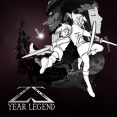
Hero of Law Original Soundtrack
infoThe Legend of Zelda: Ocarina of Time
The Legend of Zelda
Newer Super Mario Bros. Wii
Phoenix Wright: Ace Attorney - Trials and Tribulations
Phoenix Wright: Ace Attorney
The Legend of Zelda: A Link to the Past
The Legend of Zelda: Oracle of Ages
The Legend of Zelda: Skyward Sword
The Legend of Zelda: Link's Awakening (1993)
The Legend of Zelda: Ocarina of Time 3D
Super Mario Bros. Wonder
Hero of Law
Platforms: N64
Year: 2025
Catalog Number: N/A
Published by: Newer Team
Number of Files: 24
Total Filesize: 89 MB (MP3), 521 MB (FLAC)
Date Added: Dec 8th, 2025
| Change Log
Album type: Soundtrack
Uploaded by: ViviVGM

|
Description
The soundtrack for the crossover mod for The Legend of Zelda: Ocarina of Time, developed by Newer Team.
Primarily based on Koji Kondo's original soundtrack for Ocarina of Time, except where specified.
Artists:
RoadrunnerWMC (01~06,09~11,13,15,17~20,22~24)
Meatball132 (07,08,12,14,16,21)
COMMENTARY
M-01. Title Theme (RoadrunnerWMC)
References
• Title Theme (The Legend of Zelda: Ocarina of Time)
• Great Fairy's Fountain (The Legend of Zelda: Ocarina of Time)
• Main Theme (Variation) (The Legend of Zelda) [0:50, 1:19-1:23]
• Hyrule Field Main Theme (The Legend of Zelda: Ocarina of Time) [0:59, 1:04]
• Title Theme (Newer Super Mario Bros. Wii) [1:24-1:28]
"This song had a bit of an unusual history.
I was able to write the first 30 seconds of it — a rearrangement of the original game's Title Theme — on my first try…
…but then I got writer's block ("composer's block"?), and couldn't figure out how to continue it.
So I started a second attempt from scratch. I soon saw that it wasn't as good, but I found it easier to think of ideas for because it was more energetic.
Then I adapted many of those ideas back into the first version, to get the best of both!
The sections based on Great Fairy's Fountain, The Legend of Zelda main theme, and the Title Theme from Newer Super Mario Bros. Wii are from there…
…but a section based on Ganondorf's Theme didn't make the cut.
(Also, yes, you read that right. There's a Newer Super Mario Bros. Wii reference near the end of the song, if you hadn't caught it!)
Something else you might not have noticed is that the harp near the end plays mostly the same notes as the piano from the original game's Title Theme.
Anyway, once the piece was written, importing it was a challenge, since this was the first song to use more than the 16 tracks allowed by the game.
…In fact, it needed a LOT more. The project file for the final version has 54 tracks!
At any individual moment in time, though, most of them aren't playing anything.
So to fit it in, I designed a new music importing system that let you mix-and-match different parts between the 16 tracks based on a big spreadsheet.
This was very useful later for many of the other complex songs to be written for the game, such as Confrontation - Presto."
M-02. Opening (RoadrunnerWMC)
References
• Lon Lon Ranch (The Legend of Zelda: Ocarina of Time) [in the style of "Dinosaur Boss Battle"]
M-03. Defendant Lobby (RoadrunnerWMC)
References
• Song of Storms (The Legend of Zelda: Ocarina of Time)
• Defendant Lobby - So it Will Always Begin (Phoenix Wright: Ace Attorney - Trials and Tribulations) [0:35-0:56]
"My first few attempts at writing a Defendant Lobby theme sounded too bright, so I went for a darker tone with this one.
At first, it was actually TOO dark, though, with a loud piano bass and a choir singing the chords above it.
I was told it "sounded more like death row than a lobby!" Thankfully, I was able to get the right mood by changing the instrumentation.
The Song of Storms melody symbolizes the "storm" brewing in the courtroom. The pounding bass later on references another attorney game's lobby theme…"
M-04. Court is Now in Session (RoadrunnerWMC)
References
• House (The Legend of Zelda: Ocarina of Time)
"This was the very first piece of original music written for the game, back in 2022.
It's a rearrangement of the House theme. At first, I planned for this to be the Defendant Lobby theme, but we decided it would fit better here.
Unlike the rest of the soundtrack, the first draft wasn't written with the game's actual instruments, since I hadn't gotten them set up on my computer yet!"
M-05. Courageous Deductions (RoadrunnerWMC)
References
• Kaepora Gaebora's Theme (The Legend of Zelda: Ocarina of Time)
"In early development, our placeholder music for this track was Hyrule Castle Courtyard…
…so when it came time to write the real music, I tried to use that as the basis for it first.
But because of the amount of chromaticism (notes that don't fit the key signature) in that song, adapting it to the style we wanted wasn't easy.
So instead, I (obviously) based this song on Kaepora Gaebora's Theme.
The new melody is designed to mesh well with Kaepora Gaebora's. Whenever the original melody runs up or down a scale, the new one does, too.
The chords underneath flow around somewhat aimlessly, without much logic behind them. I mostly just varied the notes until they sounded nice.
It's subtle, but the triplet played on the shaker at the very end of the owl's melody is a nod to the corresponding theme from another attorney game…
M-06. Cross-Examination - Moderato (RoadrunnerWMC)
References
• Lost Woods (The Legend of Zelda: Ocarina of Time) [backwards]
"I wrote this song in one afternoon. The first draft turned out so well that I hardly needed to change anything — the final version is almost exactly the same.
I wanted to base it on the Lost Woods theme, to symbolize the twisty paths of logic Link needs to puzzle through before he can find the path forward…
…but I found it difficult to fit that song into this style.
However, I WAS able to make it work by playing the beginning of the Lost Woods melody backwards, and building the rest of the song around that!
If you reverse this song, you can hear the Lost Woods in it.
This was also the first song to get a "Thinking" variation.
Adding "Thinking" versions — where the volumes of certain tracks are changed while the Court Record is open — was my suggestion.
Not all of the other developers were on board with the idea at first…
…but after we made an in-game demonstration using this song as an example, they were convinced!"
M-07. Objection! (Meatball132)
References
• Title Theme (The Legend of Zelda: Ocarina of Time)
• Hyrule Field (The Legend of Zelda: Ocarina of Time)
"The track that became the Pursuit music was originally the Objection music. But it was too energetic.
The goal for this version, then, was to make something that sounded triumphant, but not TOO exciting, which I think I pulled off.
The rhythm played by the strings is fairly close to the rhythm in the music I used as a reference from another attorney game series.
The second half of this track is directly based on the countermelody near the end of Pursuit, by the way.
I deviated from that more than I intended to after discovering the current chord progression, though. It sounds much more satisfying to me than the original idea!
Still, I liked the idea of this soundtrack having a couple of its own little unique leitmotifs."
M-08. Suspense (Meatball132)
References
• Hyrule Castle Escape (The Legend of Zelda: Ocarina of Time)
• Suspense (Phoenix Wright: Ace Attorney)
"I made the very first music created for this mod, which was just taken directly from the original attorney game, adapted to mostly Zelda (but some custom) instruments.
It didn't turn out great, and we knew it'd be best to make original arrangements anyway. So this is the first thing I wrote after we made the decision to do that.
The idea for this soundtrack was to make it mostly Zelda, with some attorney game references sprinkled in, too. This is perhaps the most obvious example of that.
M-09. Zelda's Theme (RoadrunnerWMC)
References
• Hyrule Field (The Legend of Zelda: Ocarina of Time)
• Zelda's Lullaby (The Legend of Zelda: Ocarina of Time)
"This was the second piece of original music written for the game.
Just like Court is Now in Session, I originally wrote the intro intending for it to be the start of a lobby theme, which is why it starts with the Hyrule Field melody.
After some discussion, we decided to make it Zelda's theme instead, so I continued the song by adding Zelda's Lullaby as the main melody.
At the end of the song, I even managed to layer both melodies together in a way that sounds nice!
We wanted our version of Princess Zelda to be regal but also somewhat immature, and I think the final arrangement captures that contrast well."
M-10. The Trial Continues (RoadrunnerWMC)
References
• Hyrule Castle (The Legend of Zelda: A Link to the Past)
• House (The Legend of Zelda: Ocarina of Time)
• Treasure Chest jingle (The Legend of Zelda: Ocarina of Time)
"Court is Now in Session was the first original song I wrote for the game. Over time, I started to like it less…
…but the other developers seem to still like it, so maybe I'm being too critical of myself.
Either way, I thought I could do better. So I wrote this.
Like Court is Now in Session, it's a remix of House. It's hard to tell, but the melody does start with the same notes as House — albeit with a different rhythm and key.
At the very end is a rendition of the Got a Treasure jingle. I'd like to say there's some deep meaning behind it…
…but I just thought it'd sound fun.
Unfortunately, the way that song works — by adding more and more instruments over time — made it hard to include here for technical reasons.
I wanted it to play on top of the other instruments, but I didn't realize how close it gets to the game's polyphony (simultaneous playing sounds) limit.
By putting the two songs on top of each other, I blew way past that limit, which made notes start to cut each other off.
I did what I could to lower the number of notes without changing the sound too much…
…but it's still not perfect, sadly. I hope it doesn't bother you too much.
The soundtrack version (available from our website), at least, includes all the notes, since there are no limits there.
At any rate, once this theme was finished, the others raised concerns that it might sound too dark for the start of a trial…
…so in the end, we decided to keep both of them, and use this one for the second half, when the trial gets more serious."
M-11. Cross-Examination - Allegro (RoadrunnerWMC)
References
• Lost Woods (The Legend of Zelda: Ocarina of Time) [backwards & forwards]
"Cross-Examination - Moderato is based on just the beginning of the Lost Woods theme. For Allegro, I wanted to feature almost the entire song reversed.
The trumpet does that. The two countermelodies help make it sound more natural, as if the melody was always intended to play in that direction.
There are some nods to the Lost Woods theme when listening forwards, too.
The tambourine rhythm and the four quick pounding chords just before the loop are both direct references to it.
Near the end, part of the Lost Woods melody is played (forwards), while another instrument plays the main Cross-Examination melody.
That means the same melody is briefly played in two directions at once!"
M-12. Reminiscences (Meatball132)
References
• Zelda's Lullaby (The Legend of Zelda: Ocarina of Time)
"This one is obviously based on Zelda's Lullaby, but I made it a lot more emotional. It starts off tense, then it becomes sad.
The "sad" section is led by a piano with a fake delay effect.
This was produced by playing the part multiple times, slightly offset, quieter, and panned in the other direction to simulate the sound bouncing off a wall.
So actually, there are three pianos here. Each subsequent piano is offset further, quieter, and panned farther than the last.
But it's supposed to sound like one piano, played in an echoey space."
M-13. Ingo, The Ingenuous (RoadrunnerWMC)
References
• Ingo's Theme (The Legend of Zelda: Ocarina of Time)
"This is a pretty simple rearrangement of Ingo's Theme from the original game.
The whistle sound is newly imported. We tried several whistle instruments, from different synthesizers before, choosing this one from the Korg Triton.
The whistling captures Ingo's carefree demeanour at this point in the game (maybe even suspiciously carefree…), and the cowbell helps tie it to the ranch."
M-14. Revisualization (Meatball132)
References
• Nayru's Theme (The Legend of Zelda: Oracle of Ages)
• Ballad of the Goddess (The Legend of Zelda: Skyward Sword)
"RoadrunnerWMC handled this track at first, but struggled to get it right.
The original idea was to arrange The Legend of Hyrule, as it fit thematically with the scene.
He made a couple arrangements before giving up. The song is just too musically sparse and unusual.
After the track was reassigned to me, and my attempts at arranging the same melody similarly failed, I decided to try basing it on something more conventional.
I chose some fitting alternatives: Nayru's Song from Oracle of Ages and The Ballad of the Goddess from Skyward Sword.
As an aside, because of all the SFX in this scene, I rammed right into the game's polyphony (simultaneous playing sounds) limit. Notes kept cutting out!
We tried raising the limit, but the game immediately started chugging hard, so I had to make some changes to reduce the song's polyphony.
Namely, the piano uses the same delay effect as Reminiscences.
I had to cut this down from two delay tracks to only one, and remove it entirely when the music reaches its climax. It isn't too audible, though.
Notes can still cut out, rarely, but the song isn't totally broken anymore, so I think this fix is sufficient.
M-15. Ingo, The Restless (RoadrunnerWMC)
References
• Ingo's Theme (The Legend of Zelda: Ocarina of Time)
"My first attempt at writing an "evil" version of Ingo's theme was to add some very dissonant piano chords underneath the "normal" version.
That would've let us fade between the two versions dynamically. But it sounded more "unhinged" than "evil", and the dynamic fading wasn't necessary.
Instead, I went for a simple minor-key version, with a slower tempo and different instrumentation.
The whistling is replaced with a clarinet, and the guitar bass is a tuba now. The percussion is also heavier, to show that Ingo has a darker side deep down.
This song was rejected at first for not sounding "evil" enough…
…but after I wrote Ingo, The Manic, we decided to bring it back as an intermediate version."
M-16. Pursuit (Meatball132)
References
• Main Theme (The Legend of Zelda)
• Objection! (Phoenix Wright: Ace Attorney)
• Field (The Legend of Zelda: Link's Awakening)
"This was originally supposed to be the Objection music, but it ended up being too fast-paced, and I decided to repurpose it for Pursuit instead.
You can still hear remnants of that: some countermelodies and background arpeggios directly reference another certain game's objection theme.
The piano in the background playing erratically was inspired by Hirokazu Ando's music for the Kirby series.
I basically clicked random notes into the piano part by hand until I liked the way it sounded.
The piano sample in OoT was way too soft for this part, so I ended up importing a custom, brighter piano.
I also struggled with the latter half of the music. It needed to be longer, but there weren't any good instruments that could repeat the B section melody.
…So I imported a saxophone, too. Both custom instruments came in handy as we wrote the rest of the soundtrack."
M-17. Confrontation - Presto (RoadrunnerWMC)
References
• Lost Woods (The Legend of Zelda: Ocarina of Time) [backwards & forwards]
• miscellaneous motifs (The Legend of Zelda)
"The "Rebuttal" scene wasn't initially part of the game's script. As a result, this song was written almost two years after the Cross-Examination themes.
It features elements of both of them, such as the Fantasia instrument from Moderato and the trumpet from Allegro.
Unlike the Cross-Examination themes, I decided to ignore how this one would sound in reverse, and instead just make it as exciting as possible.
This song ended up being the most fun to write!
I was able to repurpose a melody line that had been cut from Cross-Examination - Allegro because it was too energetic.
Along with a variation of part of the Cross-Examination themes' countermelody, that became the guitar melody around the middle of the song.
Unlike most of the game's other songs, the percussion isn't reduced at all in the Thinking version, since I felt it lowered the energy too much.
Separately, I thought the middle of the Thinking version was a little repetitious at first, so I added an extra piano flourish that only plays in that version…
…but that required dedicating an entire track just for that one moment. So I had to fit the entire rest of the song into just 15 tracks, instead of the usual 16!
Another interesting technical detail is that, in the actual game scene, this song pauses itself at the end of the intro by slowing its tempo way down.
When the spotlight turns on, the game resets its tempo to the correct speed.
We did this so the melody will always start at the right moment, even if the game is ever translated and the length of the scene title textbox changes…
…or if the console or emulator were to lag, which could affect the timing.
But in this Casino scene, we don't want the sequence to pause. So we made that behaviour configurable through the game's SeqIO (Sequence I/O) interface."
If a certain SeqIO variable is set to zero, the tempo change is skipped.
We also used another SeqIO variable to let the game enable the lead-in bass beat only in this setting.
Overall, this is one of the most complex songs in the game, both musically and technically!"
M-18. Ingo, The Manic (RoadrunnerWMC)
References
• Ingo's Theme (The Legend of Zelda: Ocarina of Time)
"This theme shows the full extent of Ingo's depravity as the true villain behind the whole plot.
My first attempts at writing this song were rejected, so I live-streamed this one to the other developers as I wrote it, so I could get real-time feedback.
Compared to Ingo's last theme, the clapping has become a timpani, the cowbell is gone, and the banjo has become Ganon's organ.
It's cartoonishly evil, just like how we portray Ingo himself in this game.
I initially planned to name this song "The Murderer, Ingo". (As a reminder, the final title is "Ingo, The Manic".)
All four of Ingo's themes would've used nouns describing his changing roles: "The Farmhand", "The Suspect", "The Murderer", and "The Fool".
(His fifth theme, "Ingo, The Defeated", was written very late in development, after we changed this naming scheme.)
Anyway, we decided to change it because "The Murderer, Ingo" would've been too blatant of a spoiler to put in the soundtrack song list.
I think that was the right call. It's not worth risking ruining someone's playthrough over that.
M-19. Ingo, The Despondent (RoadrunnerWMC)
References
• Ingo's Theme (The Legend of Zelda: Ocarina of Time)
"The first three variations of Ingo's theme reveal his descent into villainy. The fourth is for when he realizes his plot was based on a misunderstanding.
Since Ingo is such a caricature of a character, I made this as excessively sad as possible.
The song is written in D minor (sometimes considered "the saddest key"), and Locrian mode (the darkest mode).
With only three instruments, it's the sparsest song in the game.
I initially wanted the harp to fade in dynamically, as you progress through Ingo's dialogue and he realizes just what he's done…
…but that would've made this song even emptier at first, so we decided not to do that.
And in the end, this song didn't even play in the game for very long at all, so that wouldn't have worked anyway.
M-20. Ingo, The Defeated (RoadrunnerWMC)
References
• Lon Lon Ranch (The Legend of Zelda: Ocarina of Time)
M-21. Victory! (Meatball132)
References
• Hyrule Field (The Legend of Zelda: Ocarina of Time)
• End Credits 2 (The Legend of Zelda: Ocarina of Time 3D)
"What do you think this music is an arrangement of?
…Did you say "Hyrule Field Main Theme"? Because that's wrong.
It's actually "End Credits 2" from Ocarina of Time 3D.
I gotcha, didn't I? :)
…
Yes, I'm serious. They're different. Mahito Yokota handled the credits theme in 3D, and his signature orchestral style is quite apparent.
A couple of songs I wrote for this game intentionally have Yokota-style flourishes and basslines.
But in this track, some sections are straight transcriptions of his credits arrangement.
The rest is only loosely based on the track, though, so my own style inherently bleeds through a bit, too.
There's also one section I pulled from the Title Theme by RoadrunnerWMC.
Before this version of the track, I made one that incorporated Epona's Song / the Lon Lon Ranch theme.
However, it was pointed out to me that although Malon is the defendant, if we ever made more cases, playing the ranch music would no longer make sense.
I also wanted the song to sound bittersweet (Malon lost her father, after all), but that version went a bit too far with it, and it wasn't happy enough.
That was after we had already cut a similar theme I made for Malon! I had started an (intentionally depressing) arrangement of Epona's Song for her.
But there wasn't really anywhere for it to be used, so I never finished it.
There's also one section I pulled from the Title Theme by RoadrunnerWMC."
M-22. End Credits (RoadrunnerWMC)
References
• Court is Now in Session (Hero of Law) [0:47-1:08]
• Court is Now in Session / The Trial Continues (Hero of Law) [1:08-1:29]
• Cross-Examination - Moderato (Hero of Law) [1:35-1:43]
• Cross-Examination - Allegro (Hero of Law) [1:43-1:50]
• Confrontation - Presto (Hero of Law) [1:50-2:05]
• Objection! / Pursuit (Hero of Law) [2:05-2:35]
• Main Theme (The Legend of Zelda: Ocarina of Time) [2:55-2:59]
• Title Theme (Newer Super Mario Bros. Wii) [3:06-3:16]
"This is the second-to-last song I wrote for the game. (Ingo, The Defeated was the last.)
It HAD to be near the end. I wanted it to rearrange many of the other songs from across the soundtrack, so those had to be written first.
At over 3 1/2 minutes long, over 150 tracks in my project file, and 26 instruments used, it's far and away the largest song in the game.
In fact, it's so large that it doesn't even fit in the amount of RAM that Ocarina of Time allocates for sequence data. We had to increase the allocation space.
(Fun fact: Ocarina of Time's credits theme actually doesn't fit, either. They solved that by splitting it into multiple parts, but we preferred not to do that.)
Anyway, there are a few interesting facts about this song from a composition standpoint…
For example, while Cross-Examination - Allegro is normally faster than Moderato, and Confrontation - Presto is faster still…
…they're played back-to-back-to-back in the credits medley, so they all need the same tempo. But Confrontation in particular felt too slow that way at first.
I had to change its rhythm quite a bit to keep a similar amount of energy with the slower tempo it needed to have.
But what I'd rather talk more about is how our credits music solves a problem that Ocarina of Time's credits have.
Other than being started at the same time, the visuals and music for OoT's credits aren't synchronized at all.
On top of that, when played on real Nintendo 64 hardware, the visuals lag heavily due to so many characters being shown at once.
The developers obviously knew this, so the timings are set up to work out correctly with the expected amount of lag…
…but emulating lag accurately is too slow to do even on modern hardware, so no current emulators do.
As a result, when emulating OoT, the end of the music often gets cut off.
Nintendo's official emulators (Virtual Console, etc.) have either modified the game to re-time the credits, or entirely replaced the credits scene with a video.
But none of that would have been necessary had the game synchronized its credits music and visuals itself.
So that's what Hero of Law does. I marked about 50 points in this song for it to update a SeqIO (Sequence I/O) variable, which the game can read.
The game waits for the variable to reach a certain value before each text or scenery change.
This way, the visuals will always stay exactly in sync with the music, on all current and future Nintendo 64-like platforms!"
M-23. (Bonus) Owl's Theme (RoadrunnerWMC)
References
• Owl's Theme (The Legend of Zelda: Link's Awakening)
• Kaepora Gabora's Theme (The Legend of Zelda: Ocarina of Time)
"The original Owl theme from The Legend of Zelda: Link's Awakening had ten notes before it looped.
To bring it up to modern musical standards, the game's 2019 remake added some chords underneath, extending the loop from 4 seconds to 24.
I decided to start there for my version, but it still felt too short — especially since the player will talk to the Owl for much longer in this game than in LA.
So I extended it further by adding a variation of those chords, and then a new section that deviates significantly, to make it more unique.
At the end is a clear quote from Kaepora Gaebora's Theme from OoT. It was tricky to fit that 4/4-time melody into 3/4 without sounding too unnatural.
All together, this version of the Owl's theme is about 56 seconds long, or 14 times the length of the original!"
M-24. (Bonus) Super Talon Game (RoadrunnerWMC)
References
• Grassland Theme (Super Mario Bros. Wonder)
"This song is a joke.
It just occurred to me one day that it would be fun(ny) to make a cover of the Grassland Theme from Super Mario Bros. Wonder with these instruments…
…specifically, with the ocarina as the whistle, and Malon's voice as the vocals.
I made it in a day or two without telling anyone, and then replaced our game's title theme with it as a little prank.
I planned to switch it back and remove it after the others had heard it. But to my surprise, Skawo wanted to keep it and invent an Easter egg to reuse it for…
…and later that day, Hero of Law's first extra scene, Super Talon Game, was born!
That's why this is just a cover and not a full rearrangement like the rest of the music in this game. It wasn't originally intended to be in the game at all!"